.png?width=120&height=120&name=money%20(3).png "money (3)")


How Does Residrill Testing Work?

Collect Detailed Structure Data
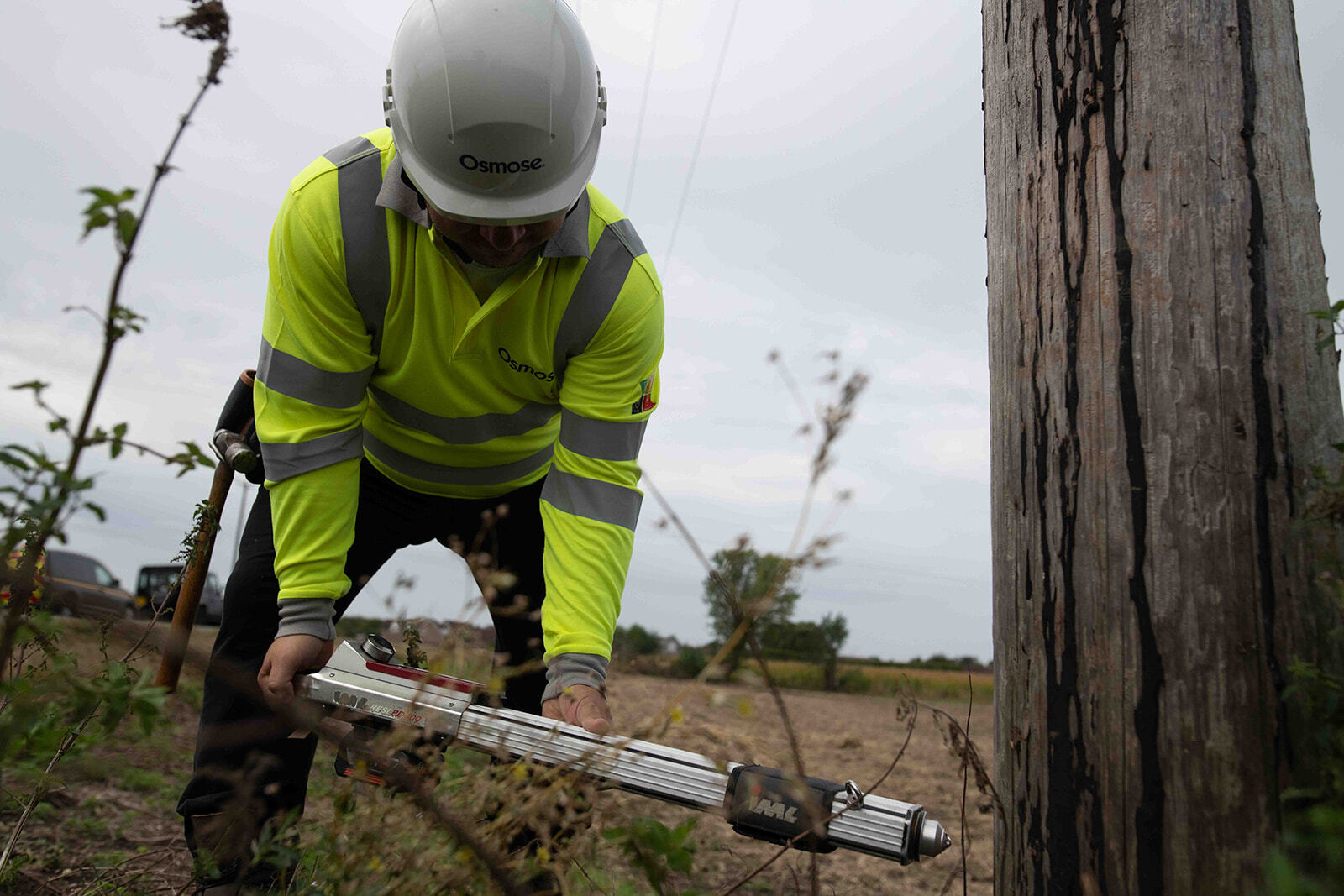
Our trained field staff will drill each pole at different levels. The residrill uses a drill bit that can extend to 400mm, enabling it to test the largest of poles. The specific rotation of the drill bit both clockwise and anti-clockwise leaves the wood fibres intact, so this method is deemed as a non-destructive test. The whole test can be completed without the need to excavate, ensuring safety and efficiency on site.
In-Depth Look at Pole Health
The motor force required for the drill to penetrate the wood is recorded against the distance travelled. This provides a comprehensive set of data and an 'at a glance' view of the inside of the pole, where suspect or rotting wood is clearly depicted. The graphs provide a clear and auditable assessment of the integrity of the pole, defects and likelihood of failure.
Calculation of the Residual Strength Value (RSV)
With data collection, assessment, and integrity of the pole determined, the graphs are used to calculate the RSV and a pass or fail result given. The RSV calculator uses proprietary methodology developed in conjunction with Newcastle University using UK pole data for unrivalled assurance. This methodology enables us to accurately give each pole an individual RSV, factor of safety and breaking load.
Through our parent company, Osmose Europe, we can offer trussing solutions for poles that need:
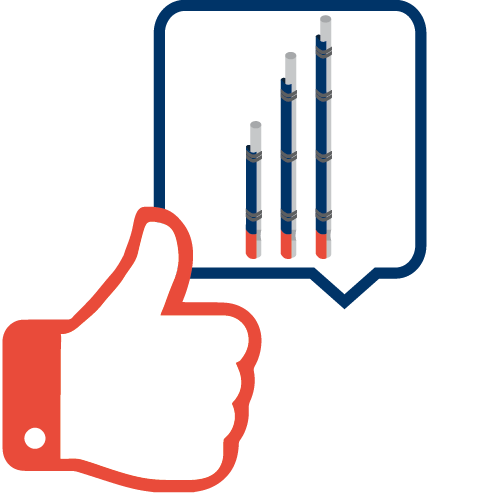
- Core strength restored due to decay or damage. (Tough Truss® Core)
- Extra bending capacity along with strength restored. (Tough Truss® Extra)
- Upgrade to the bending capacity, sometimes by multiple classes. (Tough Truss® Upgrade)
Happy to help
Contact us for a quote or more information
Our team are on hand and ready to help with whatever you need. Contact us today for specialist support, pricing and lead times